





Brown patches on the face are a common skin concern and can appear gradually or seem to develop quite suddenly. You might notice individual brown spots on your forehead, darker patches around your temples or hairline, or uneven pigmentation across your cheeks and upper lip.
These changes are often described as hyperpigmentation, which occurs when certain areas of skin produce or contain more pigment than the surrounding skin. Although many forms of pigmentation are harmless, understanding what is causing the discolouration is important before deciding how best to treat it.
At Rediscovered Skin Clinic in Highcliffe, Christchurch, we assess the type, depth and distribution of pigmentation before recommending a personalised approach. Some concerns respond well to skincare and sun protection, while others may benefit from professional treatments.
What Causes Brown Patches on the Face?
Brown patches can develop for several reasons, with sun exposure, hormonal changes and inflammation among the most common causes.
Melanin is the pigment responsible for skin colour. When its production or distribution becomes uneven, certain areas may appear darker than the surrounding skin. The pattern, location and underlying cause all influence which treatments are likely to help.
Sun Spots and Age Spots
Sun spots, also known as solar lentigines or age spots, develop following cumulative exposure to ultraviolet light. They commonly appear on the forehead, cheeks, temples, hands and other areas regularly exposed to the sun.
These spots are usually more defined than broader patches of pigmentation and can become increasingly noticeable with age. Suitable light-based treatments may help reduce their appearance, although ongoing sun protection is essential.
Melasma
Melasma typically causes larger, irregular patches of brown or grey-brown pigmentation, often appearing across the forehead, cheeks and upper lip. It is associated with several factors, including UV exposure, visible light, hormonal changes and individual susceptibility.
Pregnancy and certain hormonal medications can contribute to melasma, although it can also develop without an obvious hormonal trigger. Unlike isolated sun spots, melasma can be persistent and prone to recurrence, so treatment usually focuses on careful, long-term management.
Post-Inflammatory Hyperpigmentation
Post-inflammatory hyperpigmentation develops after inflammation or injury to the skin, including acne, irritation or certain skin treatments. As the affected area heals, excess pigment can remain, leaving a brown or darker mark.
These marks may gradually fade, but the process can take months, particularly in deeper skin tones. Treatment should address both the pigmentation and any ongoing inflammation to reduce the likelihood of further discolouration.
Why Do Dark Patches Appear on the Forehead?
The forehead is particularly vulnerable to pigmentation because it receives regular sun exposure. Brown spots may appear individually or develop into larger patches, sometimes extending towards the temples and hairline.
The appearance of the pigmentation can provide useful clues. Well-defined brown spots may be associated with sun damage, while broader, more symmetrical patches can suggest melasma. However, appearance and location alone are not enough to establish a diagnosis.
What Causes Dark Patches on the Sides of the Forehead?
Dark patches around the sides of the forehead and temples may develop due to sun exposure, melasma or post-inflammatory pigmentation. In some cases, irritation from skincare or hair products can also contribute to discolouration near the hairline.
These areas can be particularly frustrating because pigmentation may remain noticeable even when the rest of the complexion looks relatively even. Identifying the cause allows us to recommend appropriate skincare or treatment rather than assuming every dark patch will respond to the same approach.
Why Do Brown Spots Develop Near the Hairline?
Brown spots near the hairline can be associated with cumulative sun exposure, particularly where sunscreen is not applied consistently up to the edges of the face. Pigmentation may also follow irritation from hair products or inflammation affecting the surrounding skin.
A consistent sun protection routine should include the forehead, temples and hairline. If a spot is new, changing or looks different from surrounding pigmentation, it should be medically assessed before any cosmetic treatment is considered.
How Can I Treat Hyperpigmentation?
The most effective approach depends on the type of pigmentation, your skin type and how long the discolouration has been present. Some brown patches improve with carefully selected skincare, while others benefit from professional treatment alongside long-term maintenance.
At Rediscovered Skin Clinic, we generally begin by assessing the skin and identifying potential triggers. For milder concerns, a consistent skincare routine may be an appropriate starting point. More established sun damage or uneven pigmentation may benefit from targeted treatments, provided the skin is suitable.
Daily Sun Protection
Sun protection is one of the most important steps in managing hyperpigmentation. UV exposure can stimulate further melanin production, making existing patches darker and increasing the likelihood of new pigmentation developing.
We recommend daily broad-spectrum SPF 30 or higher, alongside sensible sun avoidance and reapplication when outdoors. For patients with melasma, tinted sunscreens containing iron oxides may offer additional protection against visible light, which can contribute to pigmentation.
Our guide to sun safety and SPF explains why consistent protection is so important for maintaining skin health.
Medical-Grade Skincare
Targeted skincare can help improve uneven pigmentation and support a clearer complexion over time. At Rediscovered Skin Clinic, we may recommend suitable AlumierMD products and other professional skincare according to your skin’s needs.
Ingredients commonly used in pigmentation management include:
- Vitamin C: Provides antioxidant protection and may help improve uneven skin tone.
- Retinoids: Encourage skin cell turnover and can gradually improve certain forms of pigmentation.
- Niacinamide: Supports the skin barrier and can help reduce the appearance of uneven pigmentation.
- Azelaic acid: May help improve pigmentation associated with acne and melasma.
- Kojic acid and arbutin: Can help reduce excess pigment production in suitable formulations.
Results from skincare are gradual, and consistency is important. Stronger products are not necessarily better, particularly if the skin is sensitive or prone to post-inflammatory pigmentation.
BBL Laser for Sun Spots and Pigmentation
BBL Laser uses controlled pulses of BroadBand Light to target unwanted pigment within the skin. It can be particularly effective for selected sun spots, freckles and areas of uneven pigmentation associated with cumulative sun exposure.
Pigmented spots may initially darken following treatment before gradually fading, helping the complexion appear clearer and more even. However, BBL is not suitable for every pigmentation condition, and melasma requires particular caution because heat and light-based procedures can sometimes worsen discolouration.
MOXI Laser for Uneven Tone and Skin Texture
MOXI Laser is a non-ablative fractional laser treatment designed to encourage skin renewal and improve superficial pigmentation, uneven texture and early signs of sun damage.
It may be particularly useful when pigmentation occurs alongside rough texture, enlarged-looking pores or a dull complexion. MOXI can also complement BBL in selected patients, although the suitability and timing of either treatment depend on the type of pigmentation and individual skin characteristics.
For a closer look at its benefits, explore our guide to MOXI laser for pigmentation, texture and early signs of ageing.
Chemical Peels for Superficial Pigmentation
Chemical peels use carefully selected exfoliating ingredients to encourage skin cell renewal and improve certain types of superficial discolouration.
They can be useful for uneven skin tone and selected cases of post-inflammatory pigmentation, although the formulation and treatment strength must be chosen carefully. Excessive irritation can worsen pigmentation, particularly in patients with sensitive skin or deeper skin tones.
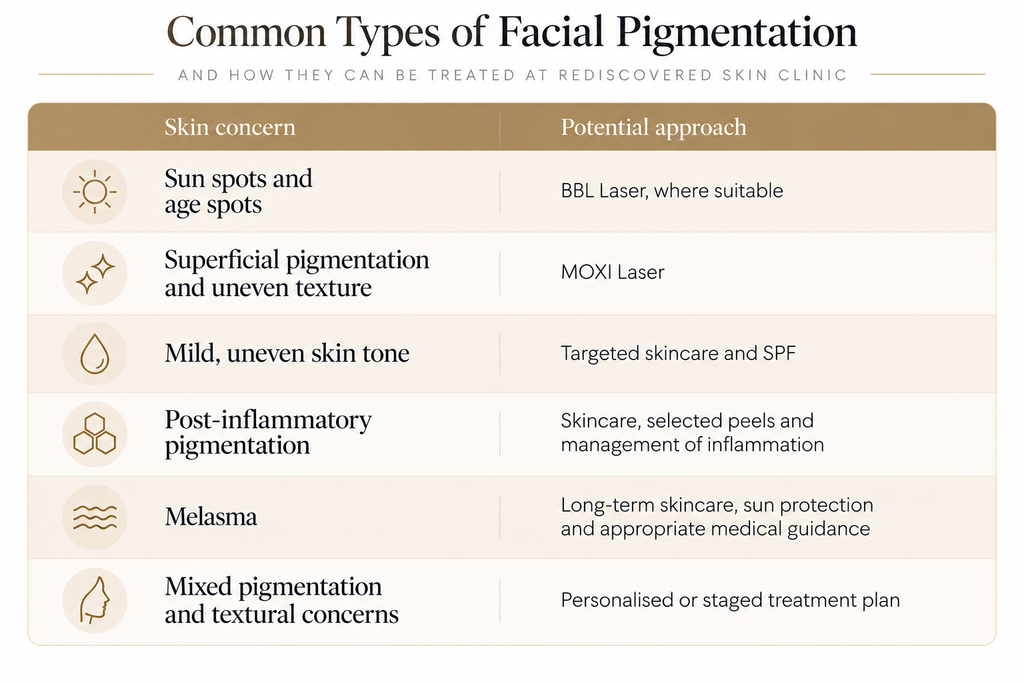
Can Brown Patches on the Face Be Removed Permanently?
Some individual sun spots can respond very well to appropriate treatment, with substantial or sometimes complete visible clearance. However, new pigmentation can develop over time, particularly with continued sun exposure.
Melasma and post-inflammatory pigmentation can be more unpredictable. Improvements are often achievable, but recurrence is possible, and long-term skincare and sun protection are important for maintaining results.
The aim is to achieve a clearer, more even-looking complexion while reducing the factors that contribute to further pigmentation.
Frequently Asked Questions About Brown Patches and Pigmentation
What Causes Brown Spots on the Forehead?
Brown spots on the forehead are commonly associated with sun exposure, melasma or post-inflammatory pigmentation. Their size, distribution and appearance can help guide assessment, although a professional evaluation is important if the cause is uncertain.
Can Dark Patches on the Forehead Go Away?
Some dark patches fade gradually, particularly when the underlying trigger has been addressed. Others, including melasma and established sun spots, may persist without targeted treatment. The outcome depends on the cause, depth and duration of the pigmentation.
Is BBL or MOXI Better for Pigmentation?
BBL is often considered for selected brown sun spots and visible discolouration, while MOXI can be useful when superficial pigmentation occurs alongside uneven texture and early sun damage. Neither treatment is automatically appropriate for melasma, so suitability should be established through assessment.
How Long Does It Take to Improve Hyperpigmentation?
Some superficial pigmentation may begin improving within weeks, while more persistent discolouration can take several months or longer to manage. Results depend on the cause, the treatments used and how consistently the skin is protected from further sun exposure.
Should I Be Concerned About a New Brown Spot?
Most brown spots are benign, but new, changing, irregular, bleeding or otherwise unusual pigmented lesions should be assessed by a GP or dermatologist. Cosmetic laser, light-based treatments or peels should not be used on an undiagnosed suspicious lesion.
Personalised Pigmentation Treatment at Rediscovered Skin Clinic
Brown patches, sun spots and uneven pigmentation can be frustrating, particularly when they persist despite a consistent skincare routine. The good news is that with the right assessment and treatment plan, many types of pigmentation can be visibly improved.
At Rediscovered Skin Clinic in Highcliffe, Christchurch, we take the time to understand what’s causing your pigmentation before recommending treatments suited to your skin. Whether you’re concerned about dark patches on your forehead, sun damage or an uneven complexion, our aim is to help you achieve clearer, brighter and more even-looking skin.
Ready to take the next step towards a more even complexion? Book your consultation at Rediscovered Skin Clinic and discover which pigmentation treatments could be right for you.
