Condition

Thread Veins

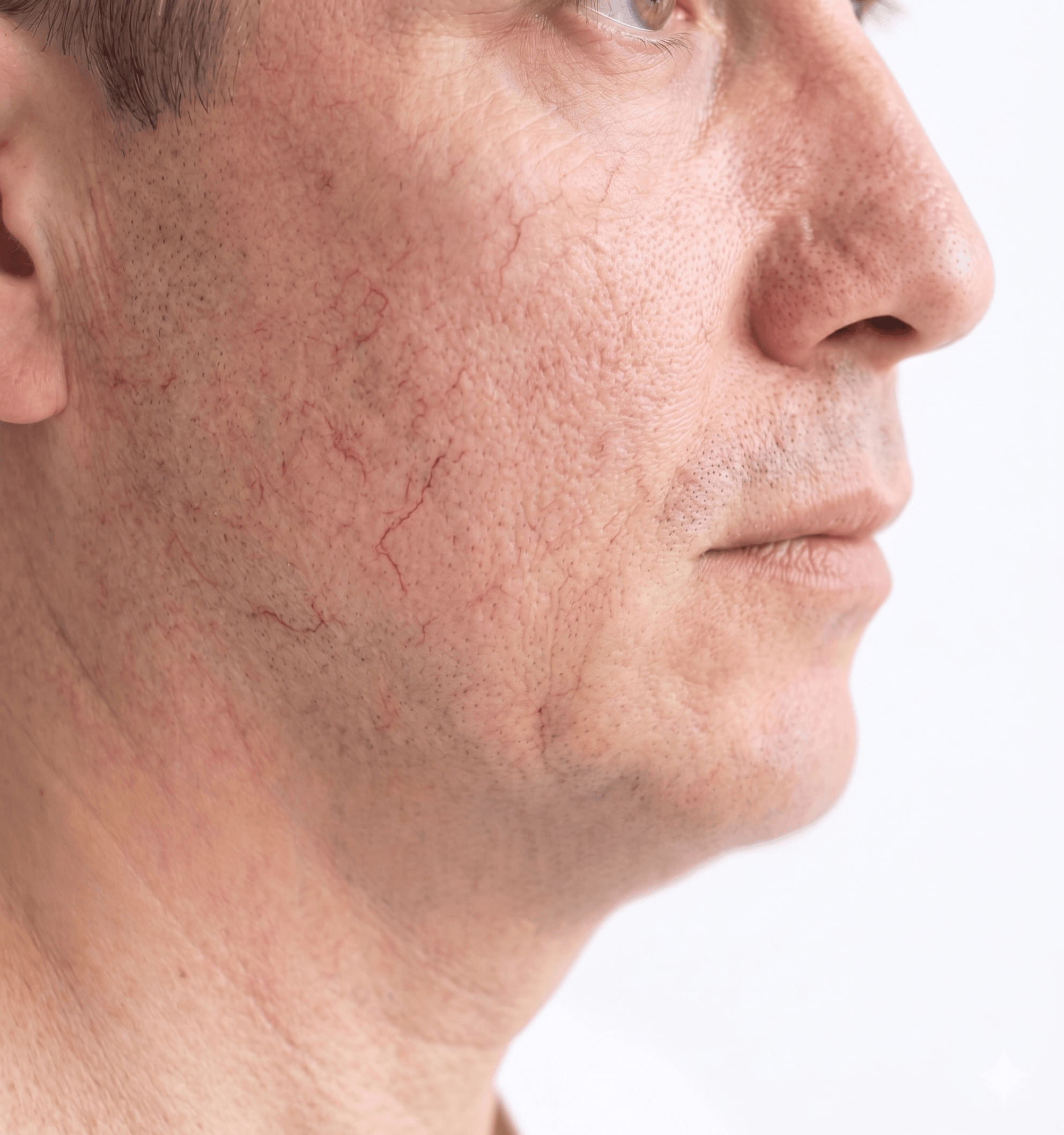
Visible red vessels can make skin look constantly flushed, reactive, or uneven.
Targeted treatment helps reduce thread veins and restore a clearer, calmer-looking complexion.

Introducing thread veins

Thread veins are small, visible blood vessels that commonly appear on the cheeks, nose, and surrounding central areas of the face.

They are usually harmless, but they can make the skin look persistently red or blotchy – and unlike temporary flushing, they do not simply fade away again.

For some people, they appear on their own. For others, they are part of a wider tendency towards redness, sensitivity, or rosacea.

Skincare alone is rarely enough to treat visible vessels once they are established.

At Rediscovered Skin Clinic, we use targeted light-based treatment to reduce the appearance of thread veins safely and effectively, helping the complexion look clearer, more even, and less reactive overall.


What are the causes?

Targeted treatments that protect and preserve your natural beauty.

Genetic tendency

Some people are naturally more prone to developing visible vessels and facial redness.

Sun exposure

UV damage can weaken vessel walls over time, making thread veins more noticeable.

Rosacea or repeated flushing

Ongoing redness, heat, or vascular reactivity can contribute to broken or visible capillaries.

Discover our treatment for thread veins

Suggested Treatments

FAQs

Many can be significantly reduced or cleared, but results depend on the number, size, and depth of the vessels

The treated vessels are unlikely to return, but new ones can develop over time, particularly if you are prone to them.

Most clients tolerate it very well. It is often described as a quick snapping sensation.

Some clients respond quickly, while others need a course of treatments depending on the extent of the redness or vessels.

Still have questions?

Please reach out to the team at Rediscovered Skin Clinic
who will be more than happy to help.

We're dedicated to safety first

Save Face is a Professional Standards Authority accredited register and is recognised by the Government, The Department of Health and NHS England.