





You may be diligent with sunscreen and still reach the end of summer noticing changes in your skin. Freckles can look darker, pigmentation becomes more obvious, redness may linger and skin that looked relatively even in spring can suddenly appear dull or patchy.
This is often the result of cumulative sun damage rather than one particularly sunny holiday. UV exposure builds over time, which is why some changes seem to appear suddenly after months or even years of exposure.
At Rediscovered Skin Clinic in Christchurch, Dorset, we often assess sun-damaged skin after summer because this is when patients start noticing these changes more clearly. While we cannot erase a history of UV exposure, many of its visible effects can be improved. The important part is identifying whether we are dealing primarily with pigment, redness, texture or a combination before deciding how to treat it.
What Does Sun Damage Look Like?
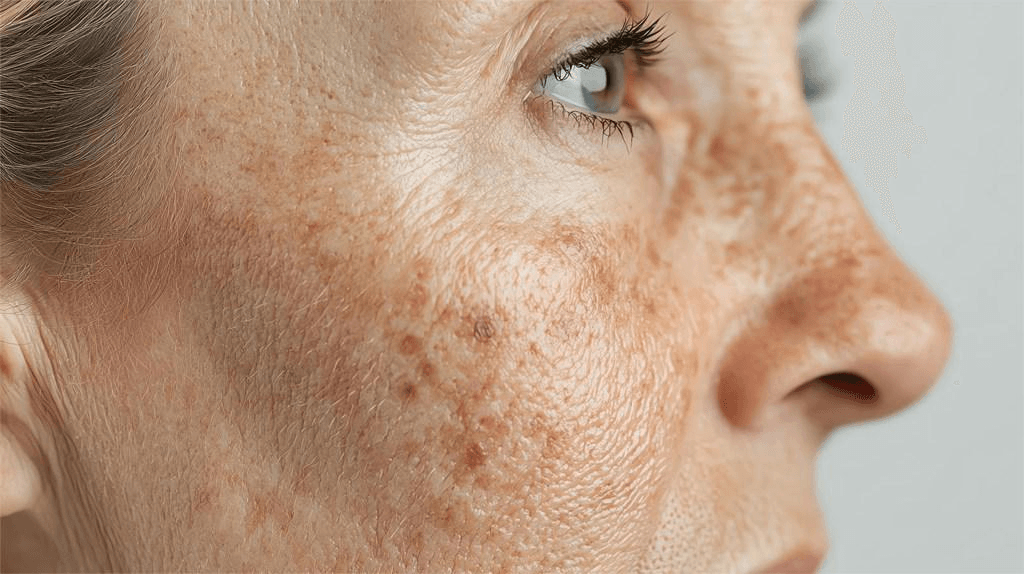
Sun damage does not have one appearance. UV exposure can affect pigmentation, blood vessels and the collagen that helps maintain the skin’s structure, so the visible changes vary considerably from person to person.
Common signs include:
- Freckles or sun spots that have become darker or more numerous
- Uneven or blotchy pigmentation
- Persistent redness or visible small blood vessels
- Dull or uneven skin tone
- Rougher texture or enlarged-looking pores
- Fine lines and reduced firmness
The face is often where these changes are noticed first, but the neck, décolletage and hands can also show cumulative UV exposure.
If pigmentation is your main concern, our guide to brown patches and hyperpigmentation explains why different forms of pigmentation need to be approached differently.
Can Sun Damage Be Reversed?
It is more accurate to talk about improving the visible effects of sun damage than completely reversing it.
Treatments can reduce unwanted pigmentation and redness, encourage skin renewal and improve texture. Some also stimulate collagen, helping to address the gradual changes in skin quality associated with repeated UV exposure.
What they cannot do is remove your history of sun exposure or prevent future damage. This is why treating sun-damaged skin is usually a combination of correction and prevention. We address what is already visible, then use appropriate skincare and year-round sun protection to help maintain those improvements.
Our guide to sun safety and SPF explains more about UVA and UVB exposure, SPF and why protection remains important even when the visible damage is being treated.
Which Treatment Is Best for Sun-Damaged Skin?
There is no single best treatment because sun damage can appear in several different ways.
At Rediscovered Skin Clinic, two treatments we frequently consider are BBL and MOXI. They are often discussed together, but they do different jobs.
BBL for Sun Spots, Pigmentation and Redness
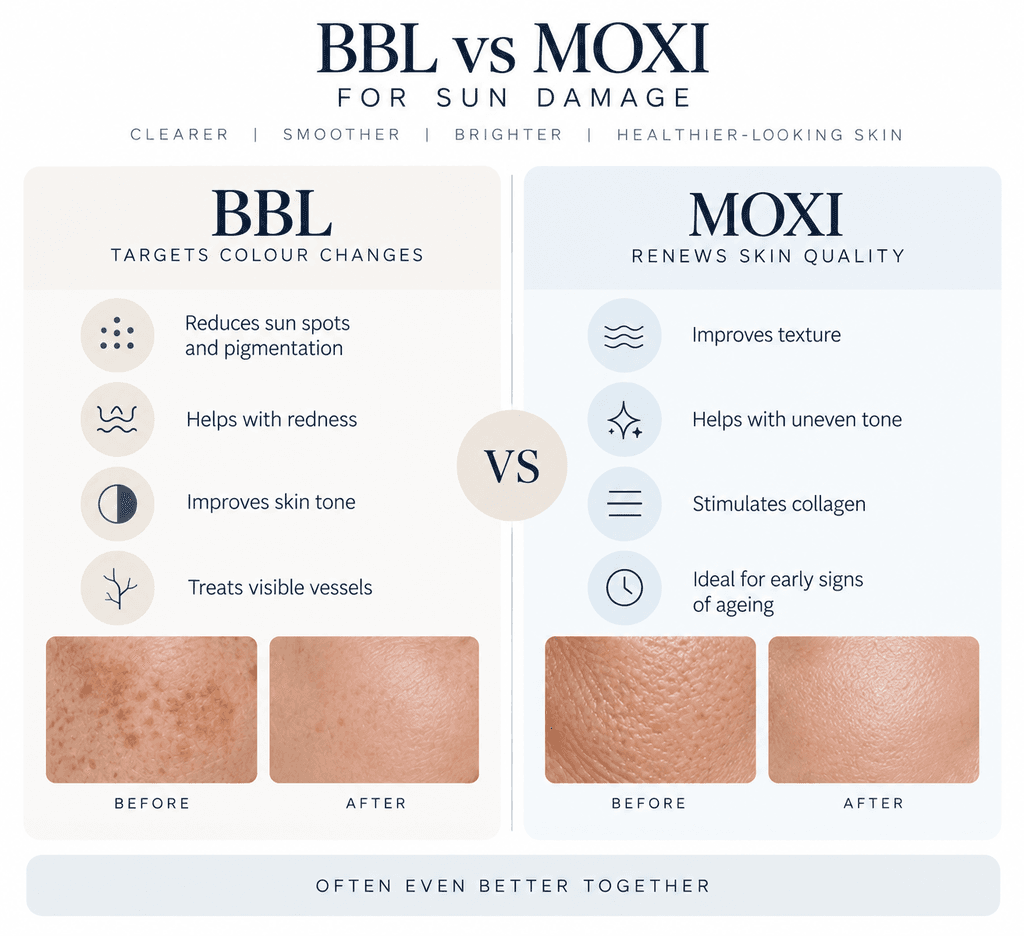
BBL (BroadBand Light) uses controlled light energy to target unwanted pigment and vascular changes within the skin.
It can be particularly useful when the main signs of sun damage are brown spots, freckles, uneven pigmentation, facial redness or visible small blood vessels.
Pigmented areas absorb the light energy and may temporarily become darker following treatment before gradually fading. When redness is also present, BBL can target the vascular component at the same time.
This makes BBL particularly relevant for patients whose post-summer concern is predominantly colour rather than texture.
You can read more about BBL Laser at Rediscovered Skin Clinic.
MOXI for Texture, Uneven Tone and Early Photoageing
Sun damage does not always present as distinct brown spots. Sometimes the complexion simply starts to look duller, rougher or less even, with early fine lines and pigmentation appearing together.
MOXI is a non-ablative fractional laser that creates controlled microscopic treatment zones within the skin. This encourages skin renewal while leaving surrounding tissue intact.
Rather than concentrating on one isolated spot, MOXI is used to improve broader changes in skin quality, including uneven pigmentation, rough texture, enlarged-looking pores, dullness and early signs of photoageing.
As the skin renews, it can become smoother and more even, while collagen remodelling develops more gradually.
For a closer look at how the treatment works, read our guide: MOXI Laser: Can One Treatment Improve Pigmentation, Texture and Early Signs of Ageing?.
BBL vs MOXI: Which Is Better for Sun Damage?
Neither is automatically better. BBL is often more appropriate when sun spots, pigmentation and redness are the main concerns, while MOXI can be better suited to uneven texture, dullness and early photoageing.
When these concerns overlap, BBL and MOXI can also be combined to address both skin tone and texture. At Rediscovered Skin Clinic, the choice between BBL, MOXI or a combination depends on what we see during your skin assessment.
Can Skincare Get Rid of Sun Damage?
Skincare is an important part of managing sun-damaged skin, but it has limitations.
A well-planned medical-grade skincare routine can support skin health, improve hydration and help manage uneven tone. Daily broad-spectrum SPF is particularly important because further UV exposure can darken pigmentation and contribute to new areas of sun damage.
However, skincare cannot necessarily clear established sun spots, visible blood vessels or more significant textural changes in the same way that an appropriately selected in-clinic treatment can.
We therefore tend to think of skincare and treatment as complementary. Treatment addresses suitable existing concerns, while home care and sun protection help support the skin and reduce further UV damage.
Why Is Autumn a Good Time to Treat Summer Sun Damage?
Autumn is often when people first take a proper look at what summer has left behind. A tan begins to fade, but freckles, uneven pigmentation and changes in skin texture can remain.
It can also be a practical time to plan certain laser and light treatments because avoiding intense sun exposure is generally easier than during peak summer. Careful UV protection is still essential before and after treatment, regardless of the season.
That does not mean every patient needs to wait until autumn. MOXI, for example, can be used at different points in the year when clinically appropriate and when sun exposure is carefully managed. We discuss this in more detail in Summer of MOXI: The Laser Treatment That Doesn’t Have to Wait Until Autumn.
The timing of treatment should therefore be based on your skin, recent sun exposure, upcoming holidays and the treatment being considered, rather than the calendar alone.
How Do You Know Which Sun Damage Treatment You Need?
Start with the skin rather than the device. A few prominent sun spots require a different approach from widespread redness, pigmentation and rough texture. We also need to consider your skin type, the severity of the changes, recent sun exposure and what you realistically want to improve.
For milder or isolated concerns, one treatment may be enough. When several signs of photodamage overlap, a combined or staged approach may be more appropriate.
Importantly, not every brown mark should automatically be treated as cosmetic pigmentation. A new, changing or unusual pigmented lesion needs appropriate assessment before any cosmetic laser or light treatment is considered.
The aim is not to fit every patient into the same post-summer protocol. It is to identify what has actually changed and choose the treatment that addresses it.
Frequently Asked Questions About Sun-Damaged Skin
Can Old Sun Damage Still Be Treated?
Yes. Visible pigmentation and other signs of sun damage may respond to treatment even when the UV exposure occurred years ago. What matters is the type and extent of the concern rather than simply how old it is.
Why Do My Sun Spots Look Darker After Summer?
UV exposure stimulates melanin production, which can make existing areas of pigmentation more noticeable. Previously subtle sun spots may therefore become easier to see following periods of increased sun exposure.
Will Sun Damage Come Back After Treatment?
Existing pigmentation can improve, but further UV exposure can cause pigmentation to recur or new sun damage to develop. Consistent sun protection is therefore an important part of maintaining results.
Can Sun Damage on the Neck, Décolletage and Hands Be Treated?
Potentially. These areas receive considerable cumulative sun exposure and commonly develop pigmentation and other signs of photoageing. The appropriate treatment depends on the area, concern and individual skin assessment.
Should Every Brown Spot Be Treated With BBL or Laser?
No. A new, changing or unusual pigmented lesion should not simply be assumed to be sun damage. If a lesion has changed in size, shape, colour or appearance, it should be appropriately assessed before cosmetic treatment is considered.
How Soon After a Summer Holiday Can I Have Laser Treatment?
This depends on the treatment, your skin and how much recent sun exposure you have had. A current tan or significant recent UV exposure may affect when treatment can safely be performed, so your skin should be assessed before booking a laser or light-based procedure.
Treating Sun Damage Starts With Understanding Your Skin
Sun-damaged skin is rarely just about one dark spot. Pigmentation, redness and changes in texture often occur together, which is why the most appropriate treatment varies from one person to another.
If you have noticed sun spots, uneven pigmentation, redness or changes in skin texture after summer, a consultation can help establish what you are seeing and whether BBL, MOXI or a carefully planned combination is appropriate.
Book a consultation with Rediscovered Skin Clinic in Christchurch, Dorset, to have your skin assessed and discuss the most appropriate approach for your concerns. We welcome patients from Christchurch, Bournemouth and surrounding areas across Dorset.
